Layered Lighting for Small Living Rooms: Principles and Simple Setups
Problem
Small living rooms often feel one-dimensional because a single overhead fixture is relied on for every activity. That bright, centralized light can make the space feel flat, glare-prone, and inflexible for reading, watching TV, or relaxing. The challenge is to create a versatile, comfortable environment without overcrowding the room with furniture or fixtures.
Principles
Layered lighting solves the problem by combining three complementary layers. Each layer has a clear role and simple rules you can apply regardless of style or budget.
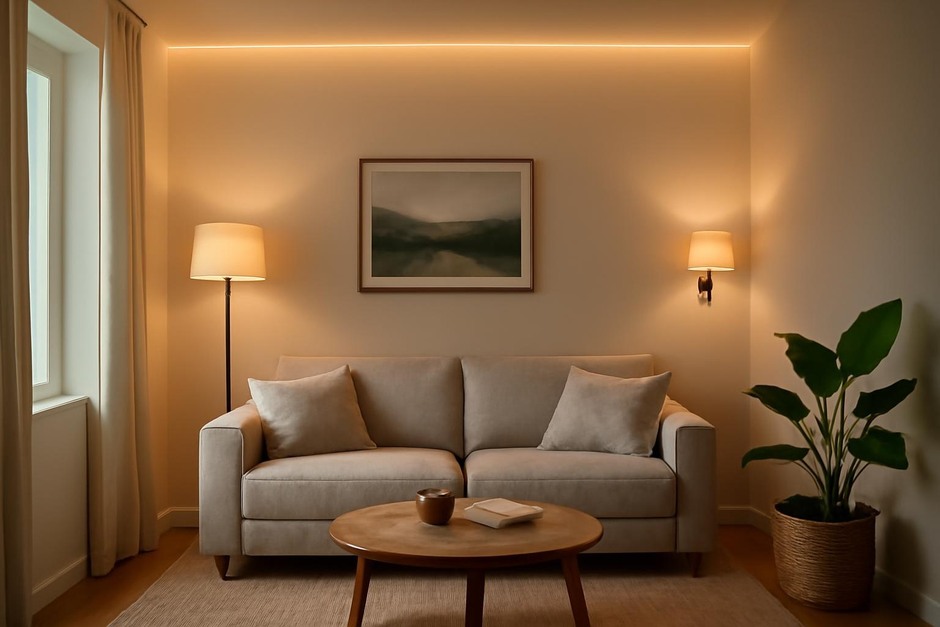
- Ambient light – the base layer: This is the general illumination that lets you move around safely and defines overall brightness. In small rooms, aim for soft, even light rather than harsh central glare. Use diffused ceiling fixtures, recessed lights on a dimmer, or multiple small sources. Target a comfortable range rather than precise numbers—think about avoiding deep shadows more than hitting an exact lumen value.
- Task light – the functional layer: This is focused light for reading, working, cooking, or other activities. Table lamps, adjustable floor lamps, and directed wall sconces work well. Position task lights so they illuminate the task without creating glare on screens or casting unwanted shadows.
- Accent light – the mood layer: Accent lighting adds depth and personality: highlight artwork, plants, shelving, or architectural details. Use LED strips, small spotlights, or uplighting to create contrast and give the eye places to rest. Accent lights should be subtler than ambient and controllable independently.
Additional practical principles:
- Color temperature: Favor warm white (about 2700–3000K) in living rooms for a cozy feel. Cooler temperatures can be used selectively for task areas if you need more visual clarity.
- Dimming and control: Dimmers or smart bulbs let you change the balance between layers. Even a single lamp on a dimmer can transform the mood.
- Scale and placement: Keep fixtures proportionate to furniture and ceiling height. In small rooms, low-profile fixtures and wall-mounted options often save space while providing effective light.
Examples
Here are three compact setups tailored to different needs. Each example follows the same principles but uses modest equipment and clear placement rules.
-
Cozy reading corner (budget-friendly)
- Ambient: Use the existing ceiling light on a dimmer or add a low-profile pendant with a frosted shade to soften illumination.
- Task: Place an adjustable floor lamp beside the armchair. Angle the lamp so the light falls on your lap rather than into your eyes or the TV.
- Accent: Add an LED picture light or a battery-powered puck light above a small bookshelf to create visual depth.
-
Multi-use living area (family-focused)
- Ambient: Install two recessed or surface-mounted fixtures spaced evenly to avoid a single bright spot; run them through a dimmer circuit.
- Task: Use a table lamp on a side table for homework or laptop use; a flexible-arm lamp can adapt to different tasks.
- Accent: Place an uplight behind a low plant or behind the media unit to reduce screen contrast and add softness during movie time.
-
Stylish small lounge (design-forward)
- Ambient: A shallow drum pendant centered above the seating area provides diffuse light without dominating the ceiling.
- Task: Mount a wall sconce with an adjustable arm beside the sofa to save floor space and provide targeted reading light.
- Accent: Use a warm LED strip along a shelving unit or inside a niche to create a layered glow and emphasize textures.
Practice Checklist
- Assess the room: note seating areas, reading spots, and screens that need different lighting.
- Add at least two layers: start with ambient plus one task or accent source.
- Prefer warm color temperatures (2700–3000K) for relaxation zones; use slightly cooler light for focused tasks if needed.
- Install dimmers or choose bulbs with adjustable brightness to balance layers easily.
- Position task lights to avoid glare on screens and to illuminate the task area directly.
- Introduce accents sparingly to create depth—one or two subtle highlights are often enough.
- Check scale: choose fixtures that fit the room proportions and leave visual breathing room.
Layered lighting is a small design practice that yields outsized results: better comfort, clearer function, and a more inviting atmosphere. Start by adding one new layer—a floor lamp, a dimmer, or a strip of accent lighting—and tune from there.